Pause More - Say Less to Achieve More Drama

In this TED talk, sculptor Reuben Margolin, exhibits his work and his perspective. Notice the extended pauses, short phrases and powerful visuals.


A presentation is about conveying your message. It's not about filling every second with you talking.

Pause more often and longer when you speak.

Presentation Tips on Twitter Presentation Skills Club on Facebook Executive Speech Coach, Business presentation tips from George Torok, the Speech Coach for Executives Share/Save/Bookmark

Tell a Personal Story and Tell it Well - opportunities will rush up to you

Richard Turere, a 12-year-old Masai boy from Kenya invented a simple yet effective device to keep the lions from eating the family herd of cows that he was charged to watch.

Because of the success of that device he was asked to conquer a bigger fear - to speak in public at a TED event. He was a shy 12-year-old boy asked to speak in front of hundreds of people. English wasn't his first langauge and he was travelling to a distant land for the first time in his life.

Watch this TED video to hear his story and more importantly learn from the story telling techniques that he used very well. You probably need to watch this video more than once because it will be difficult to notice techniques while you are entranced by his story.


What did you notice?

He employed a conversational tone - no preaching or bragging.
He spoke without notes. That's one benefit of telling a personal story. You lived it. You simply need to replay the memories.
He spoke slowy.
He set up the problem and importance quickly.
This was a life and death issue.
He allowed his emotions to show.
He revealed his thoughts, struggles and joy.
He used only a few images that aided his story.
He paused when the audience laughed. 
He smilled.


You can read the story behind this TED talk as told by Chris Anderson, Curator of TED in this article How to Give a Killer Presentation on Havard Business Review.

The article also provides excellent tips on giving a TED talk or business presentation.


Presentation Tips on Twitter Presentation Skills Club on Facebook Executive Speech Coach, Business presentation tips from George Torok, the Speech Coach for Executives Share/Save/Bookmark

Superior Presentations 70: The top three reasons are...

Build your presentation on three

How can you simplify the structure of your message and make it more powerful?


Build your presentation on a foundation of three.

Here are three ways to do that in your presentation:

3 Options

This is an effective way to offer a set of options to your audience. In a sales presentation you might offer the client a choice of Standard, Enhanced and Comprehensive. Some stores offer products that vary in quality - Good, Better and Best.

Three options are enough to allow your listeners to feel in control while not overwhelming them with too many choices. Just imagine how difficult it is to decide when you face a menu of 37 flavors of ice cream.

Give clients three options and they aren't trapped within a yes or no decision. They get to choose a matter of degrees.

3 Steps

When explaining a process or project diagram it into three stages or phases. Each might have several activities within them. By explaining the process in three steps you make it easier for your listeners to grasp the big picture and visualize the direction. Often, they don't need to understand all the details.

Three steps won't feel intimidating to your listener. Describing your plan in three steps will force you to gain a clearer perspective on things.

Top 3 Reasons

This is an effective way to respond to a question. Imagine that you are asked, "Why should I hire you?" "What makes your product so expensive?" "How is your company different from the rest?"

To any of those questions you can respond with, "The top three reasons are..."

Naturally, you respond with your strongest points. That should make a compelling case for you. Three strong points beat five or more mediocre points. This approach demonstrates that you respect your listener's time and that you can prioritize. It also allows you to add more information if needed.

To have more success with your presentation build it on sets of three.

Presentation Tips on Twitter Presentation Skills Club on Facebook Executive Speech Coach, Business presentation tips from George Torok, the Speech Coach for Executives Share/Save/Bookmark

Superior Presentations 69: Don't Speak at the Audience, Instead...

Speak to One Person at a Time


If you want to connect with the people in your audience you need to talk to each person one at a time. Each person needs to feel, "The speaker is talking to me!"

How do you accomplish that?

With direct eye contact and the right language.
 
Eye Contact
 
Imagine having lunch with a colleague who is sitting directly across the table from you. Throughout the 45-minute lunch that person never looks at you - not while you are talking or even while that person is talking to you. That person looks at the meal, out the window or at other people in the restaurant. Apparently you don't deserve even a sideways glance. How would you feel?

Now imagine how your audience might feel if you don't look at them. It's not enough to look at them as a group. Instead you must look a person directly in the eyes. As you deliver your presentation don't deliver a speech to the crowd. Instead make it appear that you are having many one-on-one conversations. Deliver a sentence or phrase to one person then connect with another, then another - until each person in the room feels that "The speaker spoke to me." You can enhance the feeling by occasionally smiling at an individual.

You might need to check your notes or your slides occasionally but make it a point to be looking at an individual 80% of the time.
 
Conversational Language

Use language that talks to an individual.

The most important word that helps you establish the one-to-one connection is the word "you". Say, "I'm happy to see you today." "Here's how this will help you." "You might be wondering how this works."

Don't say "you guys". That's trailer trash talk. It's okay when chatting with buddies at the bar but not for a business presentation. In addition it's treating your audience as a mob not individuals.

Construct and deliver every sentence as if you were talking to one person. When you look at a person, imagine that person is the only one you are talking to.

Avoid using these mob words: anybody, everybody and crowd.

How is everybody today? That's bad for two reasons. It lumps the people into a mob. It's also a dumb question because no one can speak for everybody.

Does anybody have a question? That's similar to everybody. It's a mob word and it's a dumb question.

What might you say instead? How are you today? Do you have a question?

Notice the difference.

Don't deliver a speech at your audience. Instead connect with each person by engaging in many one-on-one conversations.


Presentation Tips on Twitter Presentation Skills Club on Facebook Executive Speech Coach, Business presentation tips from George Torok, the Speech Coach for Executives Share/Save/Bookmark

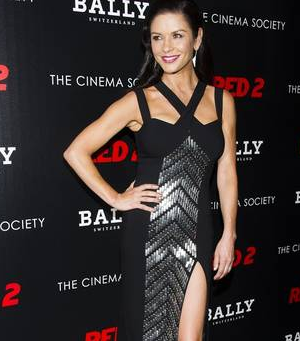
Fear of Public Speaking: Catherine Zeta-Jones

Public speaking phobia celebrity
The fear of public speaking is so common. It has nothing to do with your intelligence, success or wealth. That's why I'm appreciative of celebrities who "out" their fear of public speaking.

Catherine Zeta-Jones recently talked about her phobia of public speaking to the Belfast Telegraph. She joked that she tortures her husband, Michael Douglas before her appearances to get through her anxiety.

I woulld like to know more about the torture or the magic that Michael Douglas performed. Does she scream and cry? Does he sip a brandy while repeating, "Yes dear" ?


The key point for the rest of us is that the fear of public speaking is a normal thing even experienced by the beautiful people. 

There's no one way to deal with speech anxiety. You might work through it on your own or you might work through it with a partner. If that doesn't work - call Michael Douglas.

Read the rest of this story in the Belfast Telegraph.

Presentation Tips on Twitter Presentation Skills Club on Facebook Executive Speech Coach, Business presentation tips from George Torok, the Speech Coach for Executives Share/Save/Bookmark

Superior Presentations - 12 simple tips to deliver Superior Presentations

12 simple tips to deliver Superior Presentations
This ebook captures the first 12 tips in this series of powerful presentation tips. You can claim your copy on Amazon for less than one dollar. That's less than ten cents a tip. Go and grab your own copy now by clicking here.


Get your ebook here
 

Presentation Tips on Twitter Presentation Skills Club on Facebook Executive Speech Coach, Business presentation tips from George Torok, the Speech Coach for Executives Share/Save/Bookmark
3 Ways to Have a Real Conversation with your Audience


How can you converse with your audience? In the same way that you have a good conversation with a friend or colleague.

Use these three techniques to converse with your audience:

1. Look at an individual while you are speaking. Move your eyes about the audience so that you speak directly to every individual during your presentation.

2. Talk in a converstional style. Vary your pitch, pace and tone just as you would while conversing with a friend. Reading your speech will kill the conversational tone.

3. Tell short stories and anecdotes - just as you would in a normal conversation.

Do these three things and your presentations will feel fuller, more connected and more convincing.

Stop lecturing. Start having more conversations with your listeners.


Presentation Tips on Twitter Presentation Skills Club on Facebook Executive Speech Coach, Business presentation tips from George Torok, the Speech Coach for Executives Share/Save/Bookmark

Presentation Tip: It's not About You

Focus your presentation on your audience. What do you want them to do?


Presentation Tips on Twitter Presentation Skills Club on Facebook Executive Speech Coach, Business presentation tips from George Torok, the Speech Coach for Executives Share/Save/Bookmark

Superior Presentations 68: Move From Left to Right

Move from Left to Right

 
English and other languages originating from Europe read left to right. That means that these people naturally move their eyes from left to right when reading.

They prefer to absorb information in the same manner.

When you speak before an audience you can use that principle to enhance the acceptance of your message.

First you must realize that it's the audience's perception of left to right and not your on-stage left to right that counts. It's not what you thought you said. It's what they thought you said that is important.

How can you use this principle in your presentation?

Timeline

If you asked these people to draw a timeline of a project they will likely draw it from left to right. The left represents the beginning while the right represents the end or the future.

Here's how you can move while talking about your project or proposal. Talk about the past while standing on the extreme left side of the stage (your right). Stand in the middle of the stage when talking about the present and move to the far right of the audience when describing the desired future.

Instead of walking around you could also simply gesture to your right when talking about the past and to your left when talking about the future. Another variation is to make a quarter turn to your right to talk about the past and a quarter turn to your left to talk about the future or goal.

Objections and Obstacles

You can use the same methods to place problems in the past and solutions in the future. When you acknowledge an obstacle or an audience member raises an objection place them in the past - your right.

Place the strengths, benefits and desired outcomes of your idea or product in the future - your left.

Practice

You are reversing your movements for the benefit of your audience. This is not natural so you will need to rehearse these movements. The benefit to you is that they will be more willing to accept your ideas when they can SEE the progress.

Remember to also look in the direction in which you are gesturing to complete the picture. If you do this well the eyes of the audience will move in the direction you intended. That leverages the internal programming of the brain associated with left to right eye movement.

 
Of course when you present in the Middle East you will need to reverse everything above because they read from right to left.

George Torok

Presentation Tips on Twitter Presentation Skills Club on Facebook Executive Speech Coach, Business presentation tips from George Torok, the Speech Coach for Executives Share/Save/Bookmark